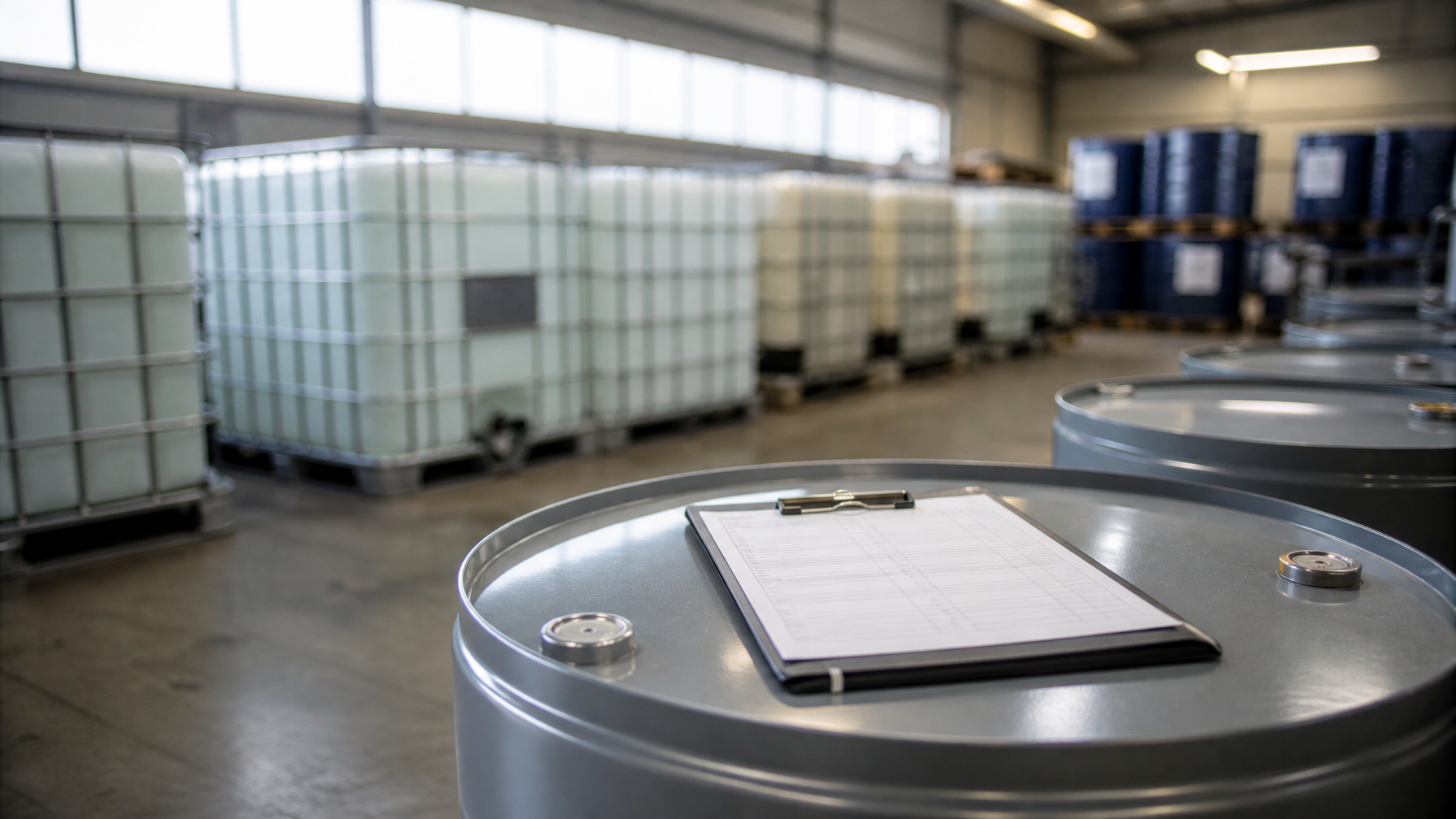
The short answer to waste transfer note vs consignment note is that they cover different types of waste. In England, a waste transfer note records each load of non-hazardous waste moved off a business's premises, while a hazardous waste consignment note must accompany every movement of hazardous waste until it reaches its final destination. The two documents differ in what they record, who completes them and how long they are kept.
This guide compares the two side by side. For a fuller look at consignment notes on their own, see our guide do I need a consignment note.
Waste transfer note vs consignment note: when each is used
The government guidance on waste transfer notes explains that for each load of non-hazardous waste moved off the premises, a business needs a waste transfer note or a document with the same information, such as an invoice. This forms part of the wider Duty of Care that applies to business waste, covered in our guide duty of care explained.
Hazardous waste follows a separate system. The guidance on consignment notes says they must be used to move hazardous waste, and that the note must stay with the waste until it reaches its final destination.
The more detailed Environment Agency consignment note guidance adds that a note is needed for all movements of hazardous waste, including:
- collections from businesses by registered waste carriers
- movements from one premises to another within the same business
- movements from customer premises, where another business has produced the waste
That guidance also lists limited exceptions, such as domestic hazardous waste (other than asbestos) moved from a household to an initial collection point. Whether waste is hazardous in the first place is a classification question for the producer, explained further in what is hazardous waste.
What each document records
A waste transfer note must include enough information to help the business taking the waste to handle and dispose of it safely. Government guidance keeps this requirement broad, and a downloadable template is available.
A consignment note is far more prescriptive. The Environment Agency guidance says that, to be valid, it must include all the information fields and be as near as possible to the format of the example note. It has five parts, A to E, and records details including:
- a unique consignment note code for that movement
- the premises the waste is removed from, and where it is going
- the process that produced the waste and its Standard Industrial Classification (SIC) code
- a full description of each waste and its List of Waste (LoW) or European Waste Catalogue (EWC) code
- the quantity in kilograms, the chemical or biological components, the physical form and the hazard codes
Who completes which part
For a waste transfer note, both the business handing over the waste and the business taking it fill in the sections that apply to them and sign the note.
The consignment note splits the work by role, and each part must be completed in order:
- producer or holder: parts A and B
- carrier (collects and transports the waste): part C
- consignor (hands the waste to the carrier): part D
- consignee (receives the waste for recycling or disposal): part E
The guidance states that parts A and B are completed before the waste is removed, and that the consignor must be present when the waste is collected. Our guide to the producer, holder, carrier and consignee roles explains each role in more detail.
How long each must be kept
Retention periods differ between the two documents and, for consignment notes, between roles. In England:
- waste transfer notes: both businesses keep a paper or electronic copy for 2 years
- producers and holders of hazardous waste: keep records (known as a register) for 3 years at the premises that produced or stored the waste, including consignment notes and consignee returns
- carriers of hazardous waste: keep records for one year at their head office
Consignees have their own retention periods, which vary with the type of site and authorisation they hold.
Season tickets and multiple collections
The guidance allows a season ticket, sometimes called an annual waste transfer note, to cover multiple transfers of non-hazardous waste over a period of up to a year. The holder, the carrier and the type of waste must stay the same throughout, and a separate schedule records the date, time, quantity and, where relevant, site of each transfer. The season ticket and schedule are kept for 2 years after the last transfer.
There is no season ticket for hazardous waste. Each consignment note code can only be used once from a given address. The Environment Agency guidance does describe a multiple collection, where hazardous waste is collected from two or more premises in a single journey by one carrier and taken to the same consignee. A round number and collection number are recorded on each note, but each premises still has its own note.
How Scotland, Wales and Northern Ireland differ
The GOV.UK guidance above applies to England. The other UK nations have their own regulators and, in some cases, their own documents. Our article on hazardous waste rules across the UK nations covers this in more depth.
- Scotland: the Scottish Environment Protection Agency (SEPA) uses the term special waste for waste with hazardous properties. Special waste produced in Scotland must be consigned using a special waste consignment note (SWCN) bearing a unique SEPA-issued code, under the Special Waste Regulations 1996.
- Wales: Natural Resources Wales (NRW) uses the same five-part note. Registered producers receive a six-character premises code, which forms the start of the consignment note code and is entered in part A3. NRW also confirms that waste which is not hazardous needs a waste transfer note instead.
- Northern Ireland: the Department of Agriculture, Environment and Rural Affairs (DAERA) explains that a standard coding system is used, in which each movement of hazardous waste needs a consignment note with a unique code, under the Hazardous Waste Regulations (Northern Ireland) 2005. Its guidance also refers to pre-notification to the Northern Ireland Environment Agency (NIEA).
Related services
We collect a range of hazardous and non-hazardous business waste streams, including through our chemical waste disposal, oil disposal and ibc recycling services. If it is unclear which document applies to a particular load, speak to our team.
Speak to our team
To discuss your waste, contact our team on 0845 366 9306 or email enquire@hazardousdisposal.co.uk.
This article is for general information only and does not constitute professional, legal or chemical advice. Waste producers are legally responsible for correctly classifying their waste. For guidance on your specific waste, please contact our team.