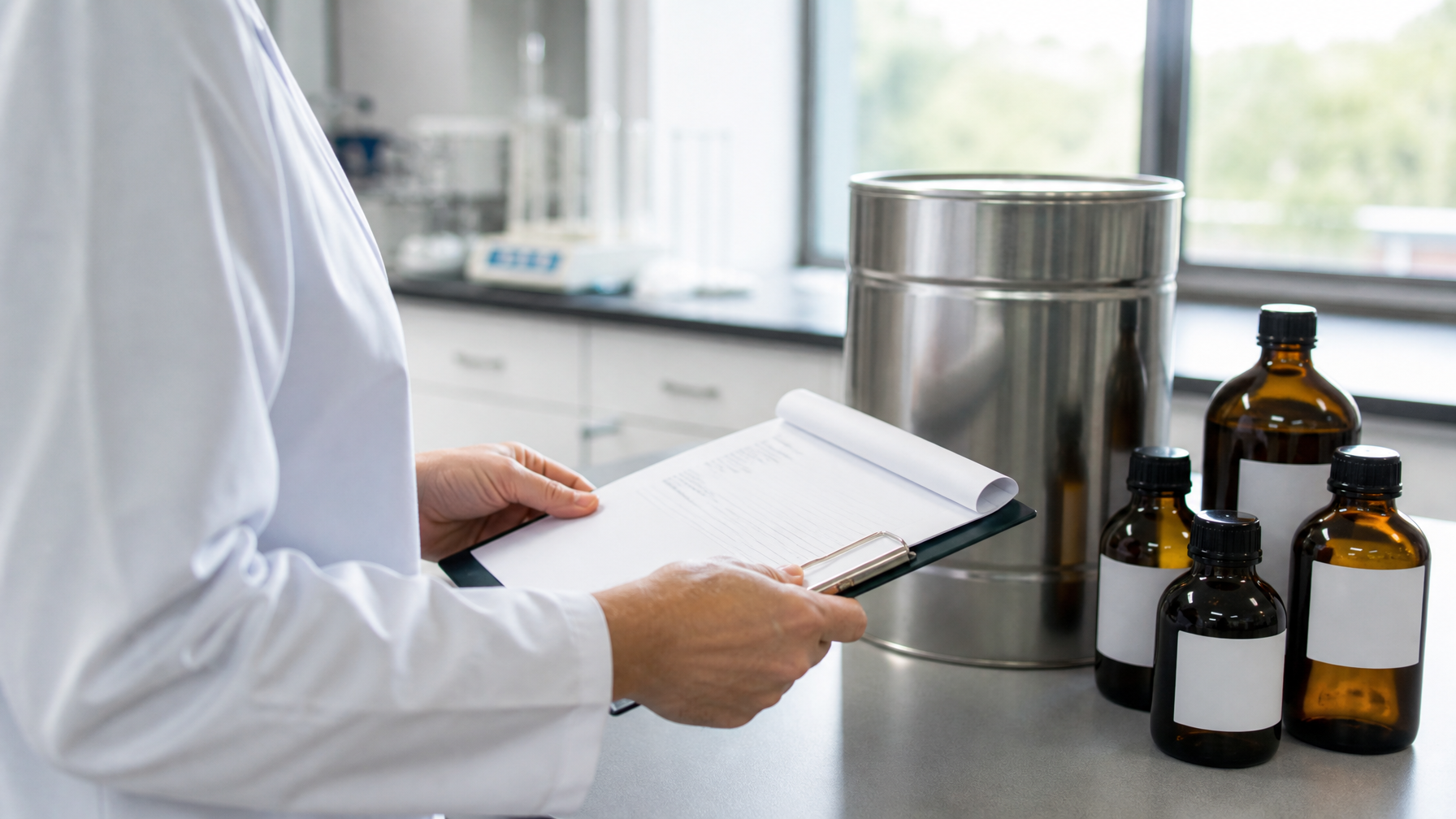
Unknown waste cannot be collected because, in the UK, waste must be classified before it is collected, disposed of or recovered, and classification depends on knowing what the waste contains. Without that information there is no reliable way to assign a waste code, complete the paperwork or choose an authorised route for the waste. For this reason we cannot collect or accept unidentified or unknown waste. This guide explains the legal background and how our identification process works.
Why classification has to come first
The government guidance on how to classify different types of waste says a business must classify the waste it produces before it is collected, disposed of or recovered. Classification is used to:
- check if the waste is hazardous
- check how the waste must be handled when it is moved
- make sure that only an authorised organisation takes the waste
- fill in waste paperwork correctly
- prevent harm to people and the environment
Classification is part of the producer's waste duty of care, and it remains the producer's legal responsibility. Our guide to duty of care explained covers this in more detail.
What the paperwork needs to describe
Waste paperwork, whether a waste transfer note or a hazardous waste consignment note, has to describe the waste. The same guidance lists what the description must include:
- the waste classification code, also called the List of Waste (LoW) or European Waste Catalogue (EWC) code
- whether it is hazardous or persistent organic pollutants (POPs) waste
- the type of premises or business where the waste was produced
- the name of the substance or substances
- the process that produced the waste
- a chemical and physical analysis of the waste and its components
- any special problems, requirements or knowledge related to the waste
Almost every item on that list depends on knowing what the waste is. For hazardous waste, the consignment note also has to record which hazardous properties the waste displays. An unlabelled drum or a container of unknown chemical waste cannot be described in this way.
What WM3 says about unknown waste
The Environment Agency's technical guidance, Waste Classification: Guidance on the classification and assessment of waste (WM3), sets out the classification procedure step by step. Its fourth step is to determine the chemical composition of the waste, because a waste cannot be assessed for hazardous properties until its composition is known.
WM3 lists three main ways composition information can be obtained:
- from the manufacturer's Safety Data Sheet (SDS), where the waste is a manufactured product whose composition has not changed
- where the waste comes from a well understood industrial process
- by sampling and analysing the waste, with Appendix D of WM3 explaining how sampling must be planned so that it is appropriate, representative and reliable
The guidance adds that an SDS should not be relied on fully if the composition has been altered during storage or use.
When composition genuinely cannot be determined
WM3 has a specific section on what happens when the composition is not known. It says all reasonable efforts should be made to determine it, because this information is needed both to classify mirror entry wastes and to complete a consignment note before hazardous waste leaves the premises where it was produced.
Mirror entries are pairs of codes in the List of Waste, one hazardous and one non-hazardous, where the correct code depends on an assessment. Under WM3, where the composition of a mirror entry waste is not known and genuinely cannot be determined, the waste must be classified under the mirror hazardous entry.
WM3 also makes clear that direct testing is not a shortcut. Direct test methods exist for some hazardous properties, such as flammability, but not for all of them. As a result, direct testing cannot be used to classify a waste of unknown composition as non-hazardous.
Where WM3 applies
The GB version of WM3 applies to waste produced, managed or regulated in England, Scotland and Wales. Northern Ireland has its own version of the guidance. The wider differences are covered in our guide to hazardous waste rules across the UK nations.
Why we cannot accept unidentified waste
Unidentified waste leaves too many open questions. Without knowing the composition, it is not possible to confirm the correct code, record the hazardous properties on the consignment note or check that the receiving site is authorised to take it. For these reasons we cannot collect or accept unidentified or unknown waste.
Information about the safe handling of any substance is on its Safety Data Sheet, and any emergency is a matter for the emergency services.
Our process does not involve, and does not ask customers to attempt, opening, smelling, mixing or testing containers. Identification starts with the information that already exists about the waste and, only where agreed, moves on to professional analysis.
How identification works with us
Our process for unknown waste follows four steps.
1. The customer speaks to our team and describes the waste, with at least an approximate idea of what it is. Useful information includes its source, the process it came from, any original product labels and a Safety Data Sheet if one is available. 2. Our team reviews the information. 3. If further identification is required, and only if agreed with the customer, we can arrange a testing and analysis service. 4. Once the waste has been identified and classified, a collection can be arranged.
Testing and analysis is optional and only takes place by agreement. Classification itself remains the responsibility of the waste producer. Where a waste sits in a grey area, speak to our team.
Related services
Once a waste has been identified and classified, and depending on what it is, our chemical waste disposal, solvent disposal and paint disposal services may be relevant. Our guide to what is hazardous waste gives more background.
Speak to our team
To discuss your waste, contact our team on 0845 366 9306 or email enquire@hazardousdisposal.co.uk.
This article is for general information only and does not constitute professional, legal or chemical advice. Waste producers are legally responsible for correctly classifying their waste. For guidance on your specific waste, please contact our team.