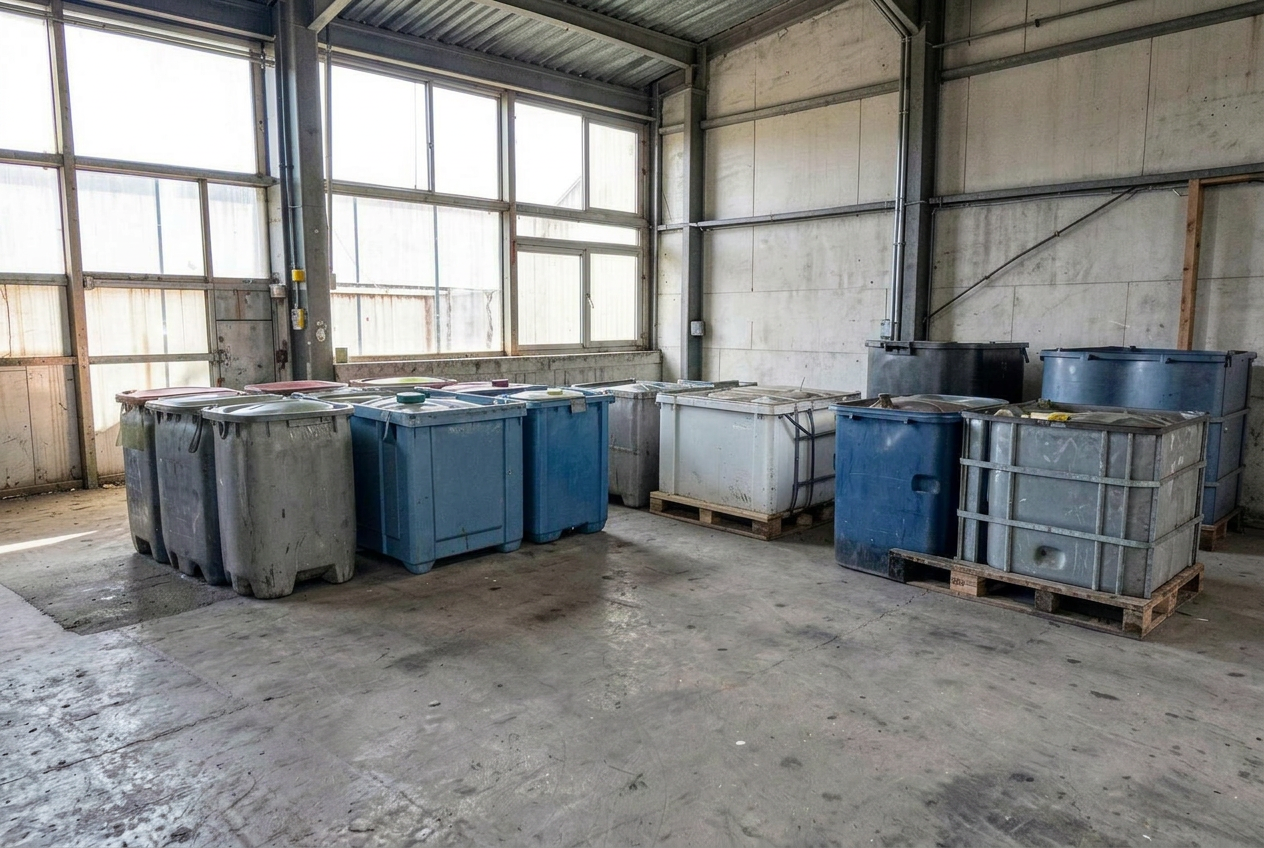
Most hazardous waste problems on commercial sites start in storage, not in transport. Containers corrode, labels fade, incompatible chemicals sit side by side, and by the time collection is booked a simple job has become a complicated one. Good storage keeps costs down and keeps you compliant.
Choose the right container
Use containers designed for the waste they hold. Solvents and fuels need sealed, chemically compatible drums or IBCs. Acids and alkalis need containers that will not be attacked by the contents. Small pack laboratory chemicals should be packed into UN approved outer boxes with absorbent material, which is how we ship collections made under laboratory chemical disposal.
Never reuse a food container, never decant into an unmarked bottle, and never fill a drum to the brim. Leave headspace for expansion.
Label as you fill
Every waste container needs to show what it holds, the hazard pictograms that apply, the date accumulation started and the name of the person responsible. Labelling at the moment of first use takes seconds. Identifying an unlabelled drum months later needs sampling and analysis, which costs far more than the disposal itself.
Segregate incompatible wastes
Keep acids away from alkalis, oxidisers away from flammables, and cyanides away from anything acidic. Store water reactive materials away from wet areas. Do not mix waste streams to save space, because a mixed load is treated at the cost of the most difficult component and mixing without a permit is an offence in its own right. The background to this is set out in what is hazardous waste.
Bund your liquids
Liquid hazardous waste needs secondary containment sized to at least 110 per cent of the largest container, or 25 per cent of the total volume stored, whichever is greater. Bunds must be impermeable, kept free of rainwater and inspected regularly. Drums stored outside a bund on a yard that drains to a surface water sewer are the single most common pollution incident we are called to help with, alongside interceptor failures handled through interceptor and contaminated water disposal.
Keep the store secure and covered
Hazardous waste should be behind a locked gate or door, away from public access, drains and traffic routes. Cover drums to keep rainwater out, because water in a drum increases the volume you pay to remove and can change the classification of the waste.
Do not let waste accumulate
There is no unlimited grace period for storing waste on site. Storage beyond reasonable accumulation periods can require a permit, and old stock deteriorates in ways that make collection harder. A scheduled collection round is usually cheaper than repeated ad hoc calls, and it prevents the store filling up. We set this up routinely for COSHH container and paint and aerosol collections.
Train the people using the store
The person carrying a drum across the yard needs to know what is in it, what personal protective equipment to wear, what to do if it spills and who to tell. Keep a spill kit next to the store, keep safety data sheets accessible and run a short refresher when the team changes.
Inspect regularly
Walk the store weekly. Look for corrosion, bulging, leaking seals, missing labels, blocked access and rainwater in the bund. Write the check down. An inspection record is one of the easiest pieces of evidence to produce when an auditor asks how you manage Duty of Care, which is explained in Duty of Care for waste producers.
Book the collection before it becomes urgent
Planned collections cost less than emergencies and give you a choice of dates. Tell us what you hold and how quickly it builds up, and we will suggest a collection frequency that keeps the store manageable. See our hazardous waste services for the full range of collections we run.